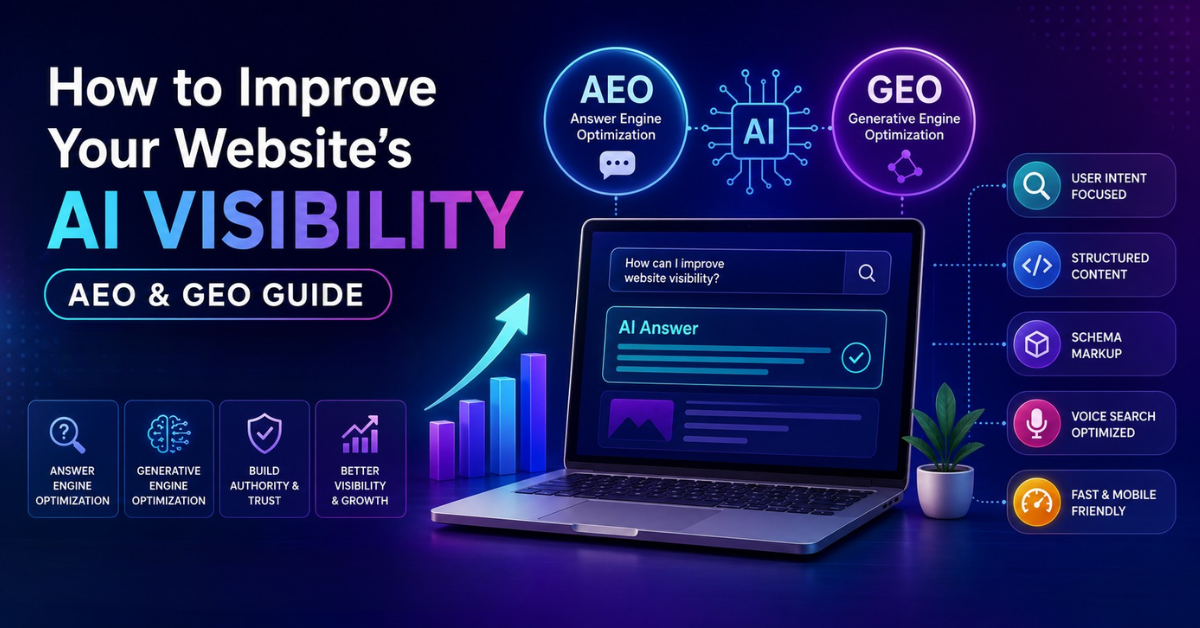
Let’s be honest, SEO isn’t what it used to be. Search engines are evolving fast, and now AI-driven systems are deciding what content gets seen, summarized, or ignored. If your website isn’t optimized for AI visibility, you’re basically whispering in a room full of loud competitors.
So, what’s the solution? Enter AEO (Answer Engine Optimization) and GEO (Generative Engine Optimization). These aren’t just buzzwords; they’re the future of digital visibility. And if you want your brand to stand out (especially in a competitive market like India), you need to master them.
What is AI visibility?
AI visibility refers to how easily your content is discovered, understood, and used by AI systems like chatbots, voice assistants, and generative search engines.
Think of it like this:
If traditional SEO is about ranking on Google, AI visibility is about being chosen by AI to answer questions.
Understanding AEO (Answer Engine Optimization)
What is AEO?
AEO focuses on optimizing your content so it directly answers user questions clearly and concisely.
Why AEO is Important
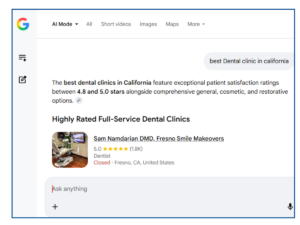
Ever noticed how Google shows direct answers at the top? That’s AEO in action. If your content gets picked, you win the visibility game instantly.
Understanding GEO (Generative Engine Optimization)
What is GEO?
GEO is about optimizing your content so AI models (like ChatGPT or Google SGE) use it when generating responses.
Why GEO is the Future
Instead of showing links, AI now creates answers. If your content feeds those answers, you become the invisible authority behind the scenes.
Core Differences Between SEO, AEO, and GEO
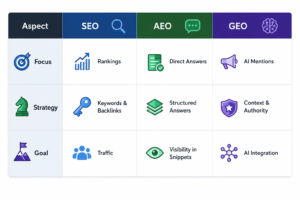
The takeaway? SEO gets you seen, AEO gets you selected, and GEO gets you recommended.
How AI Engines Read Your Website
AI doesn’t “read” like humans. It scans for:
- Structured data
- Clear headings
- Context relevance
- Authority signals
Messy content? You’re out. Clean, structured content? You’re in.
Keyword Strategy for AI Optimization
Shift from Keywords to Questions
Instead : “best digital marketing agency India”
Use: “What is the best digital marketing agency in India?”
Use Long-Tail Queries
AI loves specificity. The more detailed your query, the better your chances.
Content Structuring for AI Visibility
Use Clear Headings (H1, H2, H3, H4)
AI is all about structure. The heading must act as a map for the reader.
Answer Before Explaining
Give the reader what he needs first. This gives you more chances of being selected.
Implement Schema Markup
Schema markup is a type of structured data that helps search engines and AI systems understand your website content more clearly. Think of it as a “data guide” that explains what each page is about, making it easier for Google, ChatGPT, Gemini, and other AI-driven platforms to recognize and display your content in rich results, featured snippets, and AI-generated answers.
Adding schema improves content visibility because search engines can quickly identify important information such as business details, articles, ratings, FAQs, and services. Websites using structured data often gain higher click-through rates and stronger AI search presence.
Important Types of Schema Markup
- FAQ Schema – Helps question-answer sections appear directly in search results and voice searches.
- Article Schema – Improves visibility for blogs, guides, and news content.
- Organization Schema – Provides business information like company name, logo, contact details, and social profiles.
- Local Business Schema – Boosts local business SEO by showing address, opening hours, and location details.
- Review Schema – Displays ratings and customer reviews in search results, increasing trust and clicks.
Proper schema implementation increases your chances of appearing in Google Featured Snippets, AI Overviews, voice search results, and generative AI recommendations, making it an essential part of modern SEO, AEO, and GEO strategies.
Optimize for Voice Search
Voice searches are conversational:
- “How can I improve my website visibility?”
So your content should sound natural like you’re talking to a friend.
What Does This Mean?
Topical authority means becoming a trusted expert in a specific subject by covering it in depth. Instead of publishing random blog posts on unrelated topics, focus on creating comprehensive content around one niche. Search engines and AI platforms trust websites that consistently provide valuable, connected information on a particular subject.
For example, if your website focuses on SEO, don’t stop at basic keyword articles. Expand into related areas such as:
- AEO (Answer Engine Optimization)
- GEO (Generative Engine Optimization)
- Technical SEO
- On-page SEO
- Local SEO
- Content marketing
- Voice search optimization
When your content is interconnected and detailed, search engines see your website as an authority rather than just another blog. This improves rankings, increases AI visibility, and boosts your chances of appearing in featured snippets and AI-generated answers.
Internal Linking Strategy
Connect your content like a web.
Why?
Because AI follows links to understand relationships between topics.
E-E-A-T: The Trust Factor
Google and AI-powered search systems prioritize content that demonstrates Experience, Expertise, Authority, and Trustworthiness (E-E-A-T). These signals help search engines determine whether your website is reliable enough to recommend in search results and AI-generated answers.
That means you shouldn’t write content just to rank for keywords. Your goal should be to genuinely help users by sharing real knowledge, practical insights, and trustworthy information. Adding case studies, expert opinions, author bios, testimonials, and accurate data strengthens your credibility.
When your website consistently shows expertise and builds user trust, search engines are more likely to treat your brand as an authoritative source improving both SEO rankings and AI visibility.
Mobile & Page Speed Optimization
AI prefers websites that:
- Load fast
- Work smoothly on mobile
A slow website is like a slow waiter no one likes.
Use Conversational Content
Write like you speak.
Instead of:
“Digital marketing services are essential…”
Say:
“Let’s face it, without digital marketing, your business is invisible.”
Common Mistakes to Avoid
- Ignoring AI Trends: If you’re still stuck in 2015 SEO tactics, you’re already behind.
- Overstuffing Keywords: AI hates unnatural content. Keep it clean and readable.
- Lack of Structure: No headings = no visibility. Simple as that.
Future of AI Search
AI search is only getting smarter. Soon, users won’t search, they’ll ask. And only optimized content will survive.
So the question is:
Are you ready for that shift?
Conclusion: The Next Step for You
AI visibility on your website cannot be an option anymore; it should be mandatory for you. With the help of AEO and GEO techniques, you will have the power to place your content right in front of the people who need to see it.
But if you really want to achieve great results in no time, getting support from Webxeros Solutions can be your ticket to success.