
Most pages that fail to rank are not badly written. They are badly signposted. The content is there, but the title is vague, the headings wander, and nothing tells Google or a reader what the page is for.
That is where the guessing starts. A keyword gets added here, a paragraph gets padded there, and rankings stay exactly where they were.
On-page SEO replaces that guesswork with a repeatable process. This playbook covers what it is, why it still matters in 2026, and the exact plays to run on every page you publish.
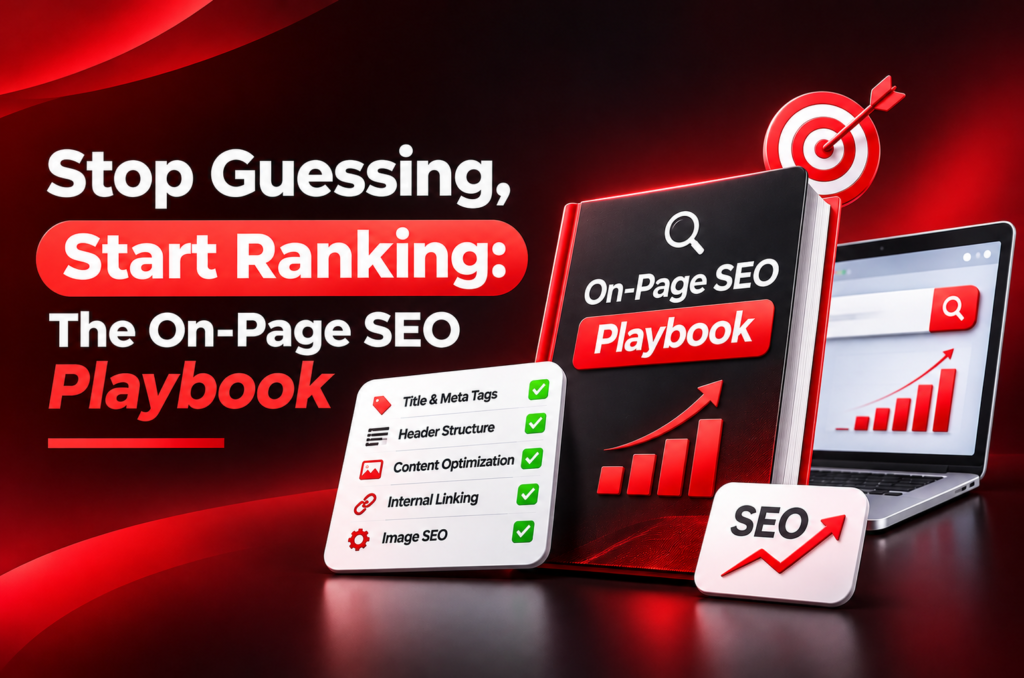
What Is On-Page SEO?
On-page SEO is the practice of optimizing the elements on an individual page, such as its title, headings, content, links, images, and URL, so search engines understand it and users find it useful. Unlike off-page SEO, you fully control every part of it.
Why On-Page SEO Matters in 2026
Search engines no longer match keywords. They judge whether a page satisfies the intent behind a query. AI overviews and answer engines go a step further and pull individual passages out of pages, so clear structure now decides whether you get quoted or skipped.
Good on-page work also makes every other channel cheaper. Backlinks pointing to a confusing page are wasted, and paid traffic landing on one converts poorly.
The On-Page SEO Playbook: 7 Plays to Run on Every Page
1. Start With Search Intent
Before writing, search your target keyword and study what ranks. If the first page is full of how-to guides, a sales page will struggle. Match the format people already expect, then do it better.
2. Write a Title Tag That Earns the Click
Put the primary keyword near the front and keep the title around 50 to 60 characters so it does not get cut off. Promise a clear outcome. A title is a headline, not a keyword list.
3. Treat the Meta Description as Ad Copy
It does not directly lift rankings, but it influences clicks. In roughly 150 to 160 characters, say what the reader gets and why your page is worth opening.
4. Build a Clean Heading Structure
Use one H1 per page, then H2s and H3s in logical order. Phrase headings the way people actually search. A reader should understand the whole page from the headings alone.
5. Answer First, Explain After
Put the direct answer in the first two sentences under each heading, then add detail. This helps impatient readers and gives AI systems a passage they can lift cleanly. Use your keyword in the first 100 words, then write naturally.
6. Link Internally With Purpose
Every important page needs contextual links from related content, with descriptive anchor text instead of “click here.” Internal links pass authority and show search engines how your topics connect.
7. Optimize Images and URLs
Compress images, use modern formats like WebP, and write alt text that describes what is shown. Keep URLs short, lowercase, and hyphenated, with the main keyword included once.
Where On-Page SEO Stops and Technical SEO Begins
On-page SEO only works when search engines can reach and render the page in the first place. A perfectly optimized article will not rank if it is blocked from crawling, loads slowly, or carries the wrong canonical tag.
That is why on-page work should sit alongside a technical SEO audit checklist that covers crawlability, indexing, Core Web Vitals, and structured data. Fix the foundation first, then polish the page.
The stakes are higher for B2B companies. Buyers research for weeks, visit several pages, and involve more than one decision-maker. An SEO audit for a B2B website should therefore review service pages, comparison content, and case studies together, checking that each one targets a distinct intent and links toward a conversion page.
On-Page SEO Mistakes That Quietly Cost Rankings
- Targeting the same keyword on several pages, so they compete with each other
- Repeating keywords until the copy reads unnaturally
- Publishing pages with duplicate or missing title tags
- Leaving old content untouched while facts and dates go stale
- Writing for a word count instead of the question being asked
Why Choose WebXeros Solutions for On-Page SEO
WebXeros Solutions treats on-page SEO as part of a complete system, not a one-time tidy-up. Every engagement starts with an audit that maps keywords to pages, flags intent mismatches, and runs a technical SEO audit checklist so nothing blocks the work that follows.
Whether you need an SEO audit for a B2B website with a long sales cycle or page-level optimization for a local business, the team prioritizes fixes by expected impact and reports on rankings, traffic, and leads.
Final Thoughts
On-page SEO is not a trick you apply once. It is a habit: understand the intent, make a clear promise in the title, answer quickly, structure the page so it can be scanned, and connect it to the rest of your site.
Do not try to fix everything at once. Pick your five most important pages, run the seven plays on each, and measure the change over the next few weeks. Small, consistent improvements beat a one-off overhaul.
The pages that win in 2026 are the clearest ones, not the longest ones. Stop guessing what Google wants and start showing it, page by page. If you would like a second pair of eyes, get a free audit from WebXeros Solutions and find out where your pages are losing ground.
Frequently Asked Questions
Q1. What is on-page SEO in simple terms?
On-page SEO means improving the parts of a web page you control, including the title, headings, content, internal links, images, and URL. The goal is to help search engines understand the page and help visitors find what they came for quickly.
Q2. How is on-page SEO different from technical SEO?
On-page SEO focuses on the content and HTML elements of individual pages. Technical SEO covers the site-wide foundation, such as crawling, indexing, speed, and mobile usability. Both are needed, which is why page optimization is usually paired with a technical SEO audit checklist.
Q3. How long does on-page SEO take to show results?
Minor changes such as improved title tags can show movement within a few weeks once Google recrawls the page. Larger content rewrites usually take two to three months. Results depend on competition, site authority, and how often your site is crawled.
Q4. How many keywords should one page target?
Focus each page on one primary keyword and a small group of closely related terms that share the same intent. Trying to rank a single page for unrelated keywords dilutes its focus and often leads to pages competing against each other.
Q5. What should an SEO audit for a B2B website include?
It should cover technical health, keyword-to-page mapping, on-page elements, content gaps across the buying journey, internal linking, and conversion paths. B2B audits also review service pages and case studies closely, since those pages influence long, multi-stakeholder purchase decisions.
Q6. How often should I update on-page SEO?
Review your most important pages every three to six months, and sooner if rankings or clicks drop. Refresh outdated facts, tighten titles, add internal links to newer content, and check that the page still matches what searchers currently expect.