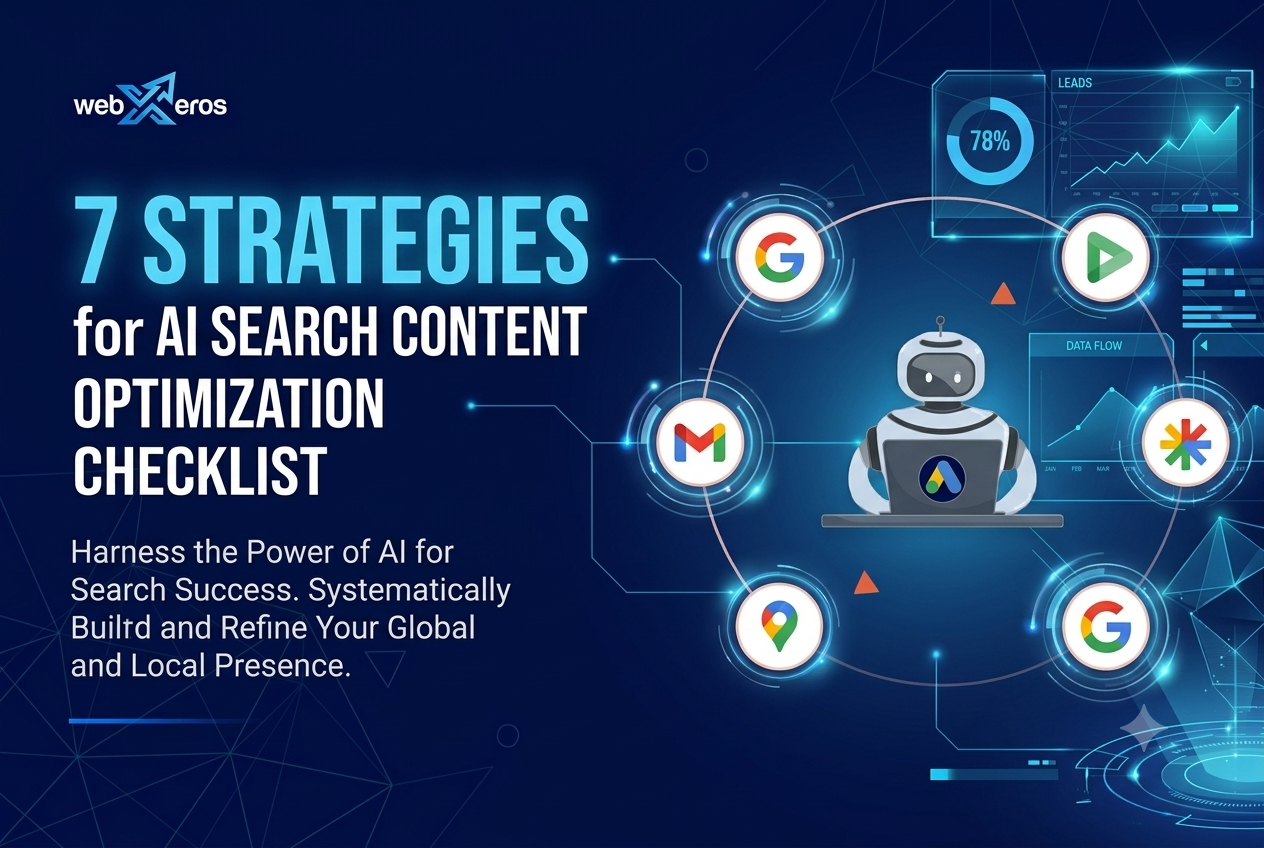
AI Search Optimization (AEO) is creating content in such a way that it is understandable, processable, and usable as an answer by technology like Google AI Overviews, ChatGPT, Perplexity, and other similar tools. It is very important as search changes from “ten blue links” to a single answer generated by AI, and if the content is not created in such a way, there will be no possibility of using it as an answer
What Is AI Search Optimization and Why Is It Important?
AI search optimization is creating, formatting, and validating the content in such a way that a large language model can understand and process it to create an answer. In contrast to traditional SEO, when the primary goal is the top ranking on the results page, AEO tries to become the answer itself.
It is very important, as today more and more people make a request and receive a single synthesized answer without visiting the website that answers their question.
AEO vs. SEO: The Core Difference
| Aspect | Traditional SEO | AEO (AI Search Optimization) |
|---|---|---|
| Core question | How do I rank higher on a results page? | How do I become the answer an AI system chooses to cite? |
| Primary goal | Position on the search results page | Inclusion inside the AI-generated answer |
| Success looks like | Being seen | Being trusted, extractable, and precise |
| What earns it | Backlinks, keywords, and domain authority | Clarity, factual accuracy, and standalone extractability |
Why AI Search Visibility Is Becoming Critical in 2026
More search sessions now begin and end inside an AI-generated summary. If your brand isn’t showing up as a cited source in these summaries, you’re invisible to a growing share of your audience, regardless of how strong your traditional rankings look.
The 10-Step AI Search Content Optimization Checklist
1. Answer the User’s Question Immediately
Answering the query of the user at the start is important since the AI crawlers always pick the first relevant statement. Therefore, do not hide the answer.
2. Structure Content With Clear Headings
It is important to organize the content in a manner where there are different headings and subheadings for different topics, allowing the crawlers to find each section independently.
3. Write for Conversational Search Intent
Since the AI crawlers work in the same way as humans do, it becomes important to give answers to the queries in a conversational way.
4. Support Claims With Authoritative Sources
It is important to provide the citations for all sources when making an assertion. An AI crawler does not pick up the claims that are not verifiable.
5. Use Schema Markup Correctly
There are various types of schemas, like FAQ Schema, HowTo Schema, and Article Schema, that are used to help the crawlers in comprehending the structure of the content.
6. Ensure AI Crawlers Can Access Your Content
Check your robots.txt file. In case you prevent the crawling of GPTBot, Google-Extended, PerplexityBot, or ClaudeBot, all your optimization will be wasted because crawlers cannot access your texts in such a way.
7. Demonstrate Expertise and Trust (E-E-A-T)
Author biography, author credentials, personal experience, and citations—all these factors are evidence of your authority and expertise. It is especially important for AI crawlers since they estimate the quality of your source and can either cite it or not.
8. Use AI-Friendly Formatting
Use lists (both bulleted and numeric), short paragraphs, tables, and highlighting of the key terms to facilitate AI crawlers in the comprehension of your texts.
9. Keep Content Accurate and Regularly Updated
Make sure that your information is accurate and updated: use dates, update statistics, and fact-check your text regularly. This factor is especially important for rapidly developing fields.
10. Measure AI Visibility, Not Just SEO Rankings
Measure your presence in AI Overview, ChatGPT answers, or Perplexity Answers. It is not sufficient just to analyze your rankings in SERPs.
How Does an AI Search Strategy Differ From Traditional SEO?
Ranking Signals: SEO vs. AEO: Traditional SEO relies on backlinks, keyword density, and domain authority. AEO relies more heavily on structured clarity, factual accuracy, and how easily a passage can be lifted as a standalone answer.
Content Format Differences: SEO content often optimizes for scannable length and keyword placement. AEO content prioritizes short, self-contained, question-and-answer style sections that don’t require the rest of the page for context.
Measurement & KPIs Comparison: SEO success is measured in rankings, organic traffic, and click-through rate. AEO success is measured in citation frequency, share of AI-generated answers, and brand mentions inside AI responses, metrics that are still maturing but increasingly trackable.
What Mistakes Should You Avoid in an AI Search Strategy?
Keyword Stuffing Without Answering Intent: Simply having keyword stuffing but not providing an answer to the query that has been made will not help in improving the AEO in any way for the AI. In this case, the AI emphasizes relevance and clarity of the posting rather than keyword density.
Ignoring Structured Data: By failing to structure the data that you are using, you will be missing some excellent opportunities to provide instructions to the AI clearly. As long as you do not allow the AI to access the data you have provided explicitly, it will need to derive the data through an implicit source.
Publishing Outdated or Unverified Information: Concerning the use of stale and unverified information, it will not be taken into account by the AI since the AI always verifies the information with other sources.
Over-Optimizing for Bots, Under-Optimizing for Humans: Optimization of content for robots, not for humans.
How We Helped a Client Win AI Search Visibility

The Challenge: A client with strong traditional SEO rankings was seeing zero visibility in AI-generated answers, meaning a growing segment of their audience never saw their brand at all.
The Strategy We Applied: We restructured their core content around direct-answer openings; added FAQ and HowTo schema; fixed crawler access issues in their robots.txt, and rebuilt key pages with AI-friendly formatting, tables, short paragraphs, and clear headings.
The Results: Within a defined tracking period, the client began appearing in AI Overview citations for multiple target queries and saw a measurable increase in brand mentions across AI-generated responses, alongside continued strength in traditional rankings.
Enhance Your AI Presence With Webxeros Solutions
Webxeros Solutions provides help with creating content that will be successful not only in natural search engine results but also in artificial ones. When you are ready to leave the game of guessing and work out a content creation strategy based on citations, we are here to assist you.
Frequently Answered Questions
What is a B2B SEO audit?
A structured review of a business website’s technical health, content, keywords, backlinks, and AI search visibility, aimed at attracting and converting other businesses’ decision-makers.
How often should a B2B company run an SEO audit?
Run a full audit at least once a year, technical spot-checks every 3–6 months, and an AI visibility check monthly. AI citation share can shift within weeks.
How is a B2B SEO audit different from a B2C audit?
B2B audits weigh multi-stage buyer journeys, longer sales cycles, and trust content like case studies more heavily than transactional keyword volume.
How do I check if ChatGPT or Perplexity is citing my website?
Run 15–20 real buyer questions manually inside each AI tool, note whether your brand is mentioned or linked, log which competitors appear instead, and repeat monthly.
Can I run a B2B SEO audit myself, or do I need an agency?
Smaller sites can start with free tools like Google Search Console and Screaming Frog. Larger or multi-region sites usually get more value from an experienced consultant or agency for the first comprehensive pass.
Does targeting both the US and India change the audit?
Yes, test site speed separately from both regions, confirm hreflang/localization is correct, and account for different search intent patterns between the two markets.